


How to Safely Jack Up a Car
Posted by Amanda M. on 26th May 2026
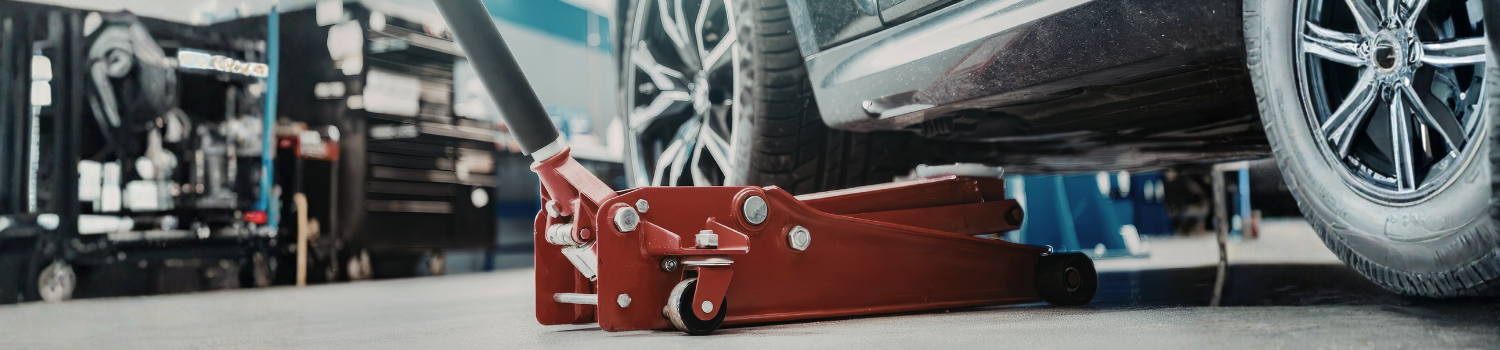
Jacking up a car is one of those jobs that looks simple until you think about what is actually happening. You are lifting thousands of pounds off the ground, creating space under or around the vehicle, and trusting your tools, surface, and technique to keep everything stable. Whether you are changing a tire, inspecting brakes, rotating wheels, checking suspension parts, or working on a fleet vehicle, safety should always come before speed.
The good news is that lifting a vehicle safely is not complicated when you use the right equipment and follow the right steps. The bad news is that shortcuts can be dangerous. A vehicle should never be supported by a jack alone while someone works underneath it. A jack is designed to lift. Jack stands are designed to support. Wheel chocks help prevent rolling. A lug wrench helps remove wheels safely. A torque wrench helps ensure the wheels go back on correctly.
Here is a practical guide to safely jacking up a car, truck, or heavy-duty vehicle.
Start With the Right Equipment
Before touching the vehicle, gather everything you need. At minimum, most lifting jobs require a properly rated jack, jack stands, wheel chocks, and basic wheel service tools. JB Tools carries many of the lifting, support, and wheel service tools needed for jobs like this, from floor jacks and jack stands to lug wrenches, torque wrenches, and wheel chocks.

For heavy-duty work, the American Forge & Foundry 20-Ton Air/Hydraulic Long-Chassis Jack is built for demanding professional environments. It has a 20-ton lifting capacity, making it suitable for heavy trucks, buses, and large vehicles. Its long 66-inch chassis helps reach difficult lift points on long-wheelbase vehicles, and the air/hydraulic operation allows fast lifting with controlled lowering. It also includes automatic overload safety valves, which are an important protection feature during heavy lifting.
Shop: Jacks

Once the vehicle is lifted, it needs to be supported. The Sunex 10 Ton High Height Pin Type Jack Stands are designed for trucks, trailers, and equipment in fleet garages, agricultural, industrial, and construction settings. These stands are used in pairs and feature a four-leg steel base, heavy schedule pipe construction, multiple height adjustment holes, and a pin-type design that makes height changes quick and secure.
Shop: Jack Stands

Wheel chocks are just as important as the lifting equipment. The Esco 12593 Wheel Chock 60 Ton is a rugged, weather-resistant polyurethane chock with a gross vehicle weight capacity of up to 60 tons, or 120,000 pounds. Its high-visibility safety yellow color helps it stand out in a shop or roadside environment, while the built-in handle makes placement easier.
Shop: Wheel Chocks
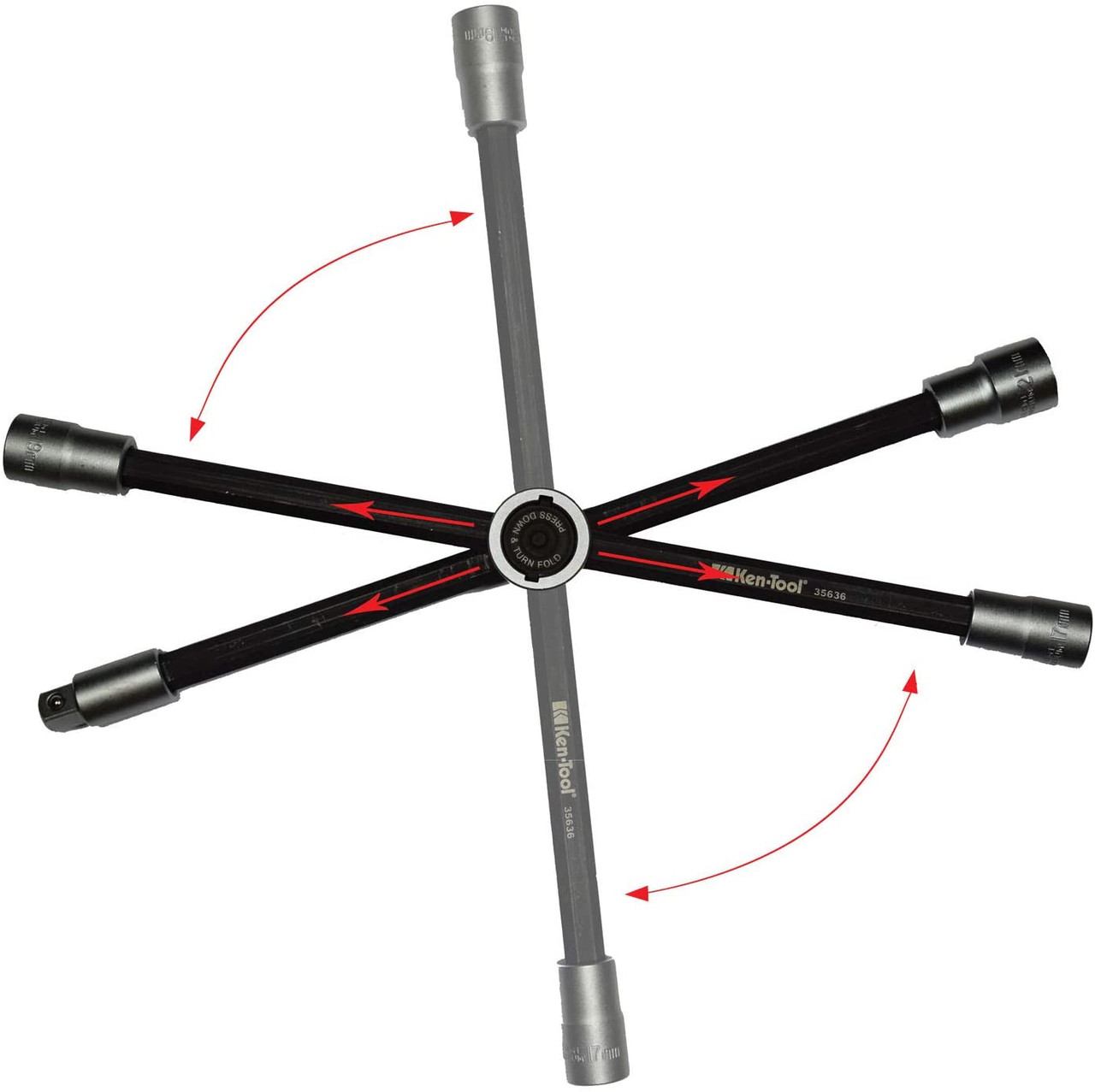
If the wheel is coming off, you will also need a lug wrench. The Ken-Tool Stow & Go 4-Way HD Lug Wrench is a compact folding option made from heavy-duty alloy steel. It includes 17mm, 19mm, and 21mm sockets, plus a 1/2-inch square drive adapter. The sliding arms provide added leverage, while the folding design makes it easy to store in a vehicle.
Shop: Lug Wrenches

Finally, use a torque wrench when reinstalling wheels. The American Forge & Foundry 5pc 1/2-Inch Drive Preset Torque Wrench Set includes preset torque values of 65, 80, 100, 120, and 140 ft-lb. Each wrench is individually calibrated, color-coded, and designed to help technicians apply consistent torque without manually adjusting the tool.
Shop: Torque Wrenches
Park on a Flat, Solid Surface
Surface choice matters. Always jack up a vehicle on level, solid ground. Concrete is ideal. Avoid gravel, dirt, grass, steep driveways, soft asphalt, or any surface where a jack or stand can sink, tilt, or shift.
Put the transmission in park if the vehicle is automatic. For a manual transmission, put it in gear. Set the parking brake, but remember that the parking brake may only hold certain wheels depending on the vehicle. That is why wheel chocks are still necessary.
If you are working in a professional shop, make sure the work area is clean, dry, and free from loose tools, hoses, oil, or debris. A clean floor is not just about appearance. It helps prevent slips and keeps the lifting equipment stable.
Chock the Wheels Before Lifting
Wheel chocks help prevent the vehicle from rolling while it is being lifted. Place chocks on the wheels that will remain on the ground. For example, if you are lifting the front of the vehicle, chock the rear wheels. If you are lifting the rear, chock the front wheels.
Use chocks on both sides of the tire when possible, especially on larger vehicles. Position them firmly against the tire tread. For heavy trucks and equipment, a high-capacity chock like the Esco 12593 is a smart safety choice because it is designed for large tire sizes and heavy vehicle weights.
Never rely on the parking brake alone. A vehicle can move unexpectedly if the brake is weak, improperly adjusted, or acting only on the lifted wheels.
Find the Correct Jack Points
Every vehicle has specific lift points. These are reinforced areas designed to safely take the load of the vehicle during lifting. On passenger cars, jack points are often located along the pinch welds or subframe. On trucks and SUVs, lift points may be located on the frame, axle, or designated suspension areas.
The best source is the owner’s manual or service manual. Do not guess. Lifting from the wrong spot can damage the vehicle or create an unstable lift. Avoid placing a jack under floor pans, exhaust components, fuel tanks, plastic shields, suspension arms not rated as lift points, or any weak body panel.
For heavy-duty vehicles, the longer reach of a jack like the American Forge & Foundry 3225 can be helpful because it allows access to deeper lift points without awkward positioning.
Loosen Lug Nuts Before Lifting
If you are removing a wheel, break the lug nuts loose while the tire is still touching the ground. This prevents the wheel from spinning and keeps the vehicle more stable. You only need to loosen the lug nuts slightly at this stage. Do not remove them until the vehicle is lifted and supported.
A tool like the Ken-Tool Stow & Go 4-Way HD Lug Wrench gives you multiple socket sizes and extra leverage, which can make loosening stubborn lug nuts easier. Use steady pressure instead of jerky movements. If a lug nut will not move, reassess your tool position and avoid placing your body where you could fall if the nut suddenly breaks loose.
Lift Slowly and Watch the Vehicle
Position the jack saddle squarely under the correct lift point. Make sure the jack wheels can roll slightly as the vehicle rises. This is normal for many floor jacks because the lifting arm moves in an arc. If the jack cannot move, the saddle can shift.
Pump the jack slowly. Watch the vehicle, the lift point, and the jack. Stop immediately if anything looks unstable, slips, creaks unusually, or leans. The vehicle should rise smoothly and remain balanced.
Lift only as high as needed. The higher a vehicle is raised, the more important stability becomes. Extra height may be necessary for certain jobs, but do not lift higher than required.
Place Jack Stands Correctly
Once the vehicle reaches the needed height, place jack stands under approved support points. These may be frame rails, axle tubes, reinforced pinch welds, or manufacturer-specified stand locations.
Adjust the stands so they sit evenly and at the same height when supporting the same end of the vehicle. Pin-type stands, like the Sunex 1410, use a pin through the support tube to lock the height. Make sure the pin is fully inserted and secured before lowering the vehicle onto the stands.
Lower the jack slowly until the vehicle rests fully on the stands. Keep the jack in light contact with the lift point as a backup, but do not treat it as the main support. The stands should be carrying the load.
Before working, gently push the vehicle from the side. It should feel solid and stable. If it rocks, shifts, or feels uncertain, lift it again and reset the stands.
Never Work Under a Vehicle Supported Only by a Jack
This is the most important rule. A jack can fail, roll, lose hydraulic pressure, shift on the floor, or slip from the lift point. Even a high-quality jack is not a substitute for jack stands.
If any part of your body will be under the vehicle, use properly rated jack stands on a solid surface. Do not rely on a spare tire jack, a hydraulic jack, a floor jack, or blocks of wood as the only support.
Also, avoid stacking stands on bricks, lumber, concrete blocks, or improvised spacers. Use the right stand height and capacity for the job.
Remove the Wheel Safely
Once the vehicle is supported, remove the loosened lug nuts and pull the wheel straight off. Place the wheel flat on the ground away from your work area. Some people slide the removed wheel under the frame as an added emergency buffer, but this should never replace properly placed jack stands.
Keep lug nuts together so they do not roll away. Inspect studs and lug nuts for damage, rust, or cross-threading before reinstalling the wheel.
Reinstall the Wheel and Torque the Lug Nuts
When reinstalling the wheel, start all lug nuts by hand. This helps prevent cross-threading. Tighten them snugly in a star pattern, but do not fully torque them while the vehicle is still in the air.
Raise the vehicle slightly with the jack, remove the stands, and lower the vehicle until the tire just contacts the ground enough to prevent spinning. Then, torque the lug nuts to the manufacturer’s specification using a torque wrench.
This is where the American Forge & Foundry 5pc Preset Torque Wrench Set can help. The preset values cover common automotive and light truck lug nut torque ranges, and the color-coded design makes it easy to select the correct wrench quickly. Always confirm the correct torque spec for the specific vehicle. Over-tightening can damage studs, wheels, and brake components. Under-tightening can allow a wheel to loosen while driving.
After driving a short distance, recheck lug nut torque when recommended by the vehicle or wheel manufacturer.
Lower the Vehicle Carefully
Before lowering, make sure all tools, parts, and people are clear. Raise the vehicle just enough to remove the jack stands. Pull the stands away, then lower the jack slowly and smoothly. A controlled descent is safer for both the vehicle and the technician.
Once the vehicle is fully on the ground, remove the wheel chocks last. Do one final check around the vehicle for tools, loose lug nuts, or anything left underneath.
Common Jacking Mistakes to Avoid
The most common mistakes are usually simple ones. Do not jack a car on a slope. Do not skip wheel chocks. Do not use the wrong lift point. Do not crawl under a vehicle supported only by a jack. Do not exceed the rated capacity of your equipment. Do not use damaged stands, bent jack handles, leaking hydraulic jacks, or cracked chocks.
Also, make sure your equipment matches the job. A small emergency jack may be acceptable for changing a tire on the roadside, but it is not ideal for repair work. Heavy vehicles need heavy-duty lifting and support equipment. When in doubt, choose tools with capacity, stability, and safety features appropriate for the vehicle.
Final Thoughts
Safely jacking up a car is about preparation, patience, and the right tools. The process starts before the vehicle leaves the ground. Choose a flat surface, chock the wheels, confirm the correct jack points, lift slowly, support the load with jack stands, and torque the wheels properly when the job is done.
For home garages, fleet shops, and heavy-duty service environments, investing in quality lifting and wheel service tools makes the work safer and more efficient. A strong jack lifts the vehicle. Reliable jack stands support it. Wheel chocks keep it from moving. A good lug wrench helps remove the wheel. A torque wrench helps put it back on correctly.
Whether you are stocking a home garage or maintaining a professional shop, you can find many of these essential automotive tools and shop supplies at JB Tools. When lifting a vehicle, every step matters. Take your time, use the right equipment, and never compromise on safety.
FAQ
What tools do I need to safely jack up a car?
To safely jack up a car, you need a properly rated floor jack, jack stands, wheel chocks, and the correct wheel service tools. A jack lifts the vehicle, but the jack stands support it while you work. Wheel chocks help prevent the vehicle from rolling, while a lug wrench and torque wrench are useful when removing and reinstalling wheels.
Can I work under a car supported only by a jack?
No. You should never work under a car supported only by a jack. A jack is designed to lift the vehicle, not hold it safely for an extended period. Always lower the vehicle onto properly rated jack stands before working underneath it.
Where should I place the jack when lifting a car?
Place the jack only under the manufacturer-approved jack points or lift points. These are reinforced areas designed to handle the vehicle’s weight. Common locations include pinch welds, frame rails, axles, or subframe points, depending on the vehicle. Always check the owner’s manual before lifting.
Do I need wheel chocks when jacking up a car?
Yes. Wheel chocks are an important safety step when jacking up a car. Place them against the wheels that remain on the ground to help prevent the vehicle from rolling. For example, if you lift the front of the vehicle, chock the rear wheels.
Should I loosen lug nuts before or after jacking up the car?
Loosen lug nuts slightly before jacking up the car. This keeps the wheel from spinning and helps keep the vehicle stable while you break the nuts loose. Once the vehicle is lifted and supported on jack stands, you can fully remove the lug nuts and wheel.
Why should I use a torque wrench after changing a tire?
A torque wrench helps tighten lug nuts to the manufacturer’s recommended specification. This is important because under-tightened lug nuts can loosen while driving, while over-tightened lug nuts can damage studs, wheels, or brake components. Always torque lug nuts in a star pattern after reinstalling the wheel.