


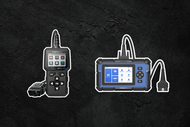
OBD2 Scanner vs Code Reader: What’s the Difference?
Posted by Amanda M. on 2nd Jul 2026

When your check engine light turns on, the first question is usually simple: “What’s wrong with my car?” The answer often starts with plugging a diagnostic tool into your vehicle’s OBD2 port. But when you start shopping for one, you will quickly see two common options: an OBD2 code reader and an OBD2 scanner.
They sound similar, and they both help you understand vehicle trouble codes, but they are not the same tool. A code reader is usually a simpler, more affordable device that reads and clears diagnostic trouble codes. An OBD2 scanner can do much more, depending on the model. It may show live data, run system tests, read manufacturer-specific codes, access ABS or airbag systems, and help diagnose deeper vehicle problems.
Knowing the difference can help DIYers, technicians, and shop owners choose the right diagnostic tool for the job. Whether you are trying to reset a check engine light, troubleshoot a rough idle, or monitor sensor data, JBTools.com offers automotive diagnostic tools to help you work smarter.
What Is OBD2?
OBD2 stands for On-Board Diagnostics II. It is the standardized vehicle diagnostic system used on most cars and light trucks sold in the United States since 1996. The OBD2 system monitors the engine, emissions, fuel, and related vehicle systems. When the computer detects a problem, it stores a diagnostic trouble code, also called a DTC.
These codes help point you toward the issue. For example, a code may indicate a misfire, oxygen sensor problem, evaporative emissions leak, catalytic converter efficiency issue, or mass airflow sensor fault.
The OBD2 port is usually located under the dashboard on the driver’s side. By plugging in a code reader or scanner, you can access information stored in the vehicle’s computer.
What Is a Code Reader?
A code reader is the simpler of the two tools. Its main job is to read and clear diagnostic trouble codes from the vehicle’s computer. Most basic code readers focus on powertrain codes, which are often related to the engine, transmission, fuel system, and emissions system.
For many drivers, that may be enough. If your check engine light comes on and you want to know why, a code reader can give you a starting point. It can show a code such as P0301, which indicates a cylinder 1 misfire, or P0420, which often relates to catalytic converter efficiency.
A code reader is usually compact, easy to use, and budget-friendly. It is a good choice for someone who wants a quick explanation of a check engine light without needing advanced diagnostic features.
What a Code Reader Usually Does
Most basic code readers can:
- Read check engine light codes
- Display generic OBD2 trouble codes
- Clear codes after repairs are made
- Turn off the check engine light if the issue has been corrected
- Show basic code definitions
- Display emissions readiness status on some models
A code reader is helpful, but it does not always tell the full story. It may show you the code, but it usually will not provide the deeper data needed to confirm the cause.
Shop Now: OBD2 Code Reader
What Is an OBD2 Scanner?
An OBD2 scanner is a more advanced diagnostic tool. While it can read and clear codes like a code reader, many scanners also provide live data, freeze frame data, system tests, enhanced diagnostics, and access to additional vehicle modules.
Depending on the scanner, it may be able to read ABS codes, airbag codes, transmission codes, battery system data, and manufacturer-specific codes. Some advanced scan tools can also perform service resets, relearn procedures, actuator tests, and bidirectional controls.
For DIYers who do more than basic maintenance, an OBD2 scanner can be a much better long-term investment. It helps you go beyond “what code is stored?” and move toward “what is actually causing the problem?”
What an OBD2 Scanner Usually Does
Depending on the model, an OBD2 scanner may be able to:
- Read and clear generic OBD2 codes
- Read manufacturer-specific codes
- Display live sensor data
- Show freeze frame data
- Check emissions readiness monitors
- Read ABS, SRS, transmission, and body control codes
- Graph sensor readings
- Perform battery and charging system checks
- Run onboard monitor tests
- Reset oil lights or maintenance reminders
- Perform throttle, steering angle, or idle relearn functions
- Offer diagnostic reports or repair suggestions
Not every scanner has every feature, so it is important to compare tool capabilities before buying.
Shop Now: OBD2 Scanner
Code Reader vs OBD2 Scanner: Main Differences
The biggest difference between a code reader and an OBD2 scanner is the depth of information.
A code reader is best for quick code checks. It can tell you why the check engine light may be on, but it usually gives limited information. A scanner provides more diagnostic detail and can help you investigate the problem more accurately.
For example, if your vehicle has a lean fuel code, a basic code reader may show P0171. That tells you the engine is running lean on bank 1. But it does not prove the cause. The issue could be a vacuum leak, a weak fuel pump, a dirty mass airflow sensor, an exhaust leak, or a faulty oxygen sensor.
An OBD2 scanner with live data can help you look at fuel trims, oxygen sensor activity, mass airflow readings, and engine load. That extra information can help narrow the issue instead of guessing and replacing parts unnecessarily.
When a Code Reader Is Enough
A code reader may be enough if you only want to check why your check engine light is on. It is also useful if you do basic DIY repairs and want to confirm whether a code returns after you fix the issue.
A code reader is a good choice if:
- You only need basic check engine light information
- You want an affordable tool for occasional use
- You do not need live sensor data
- You mainly work on your own vehicle
- You want to check emissions readiness before inspection
- You are comfortable researching code meanings separately
For many vehicle owners, a code reader is a handy glove box or garage tool. It can save time by giving you a basic idea of what is going on before you visit a repair shop.
When You Need an OBD2 Scanner
An OBD2 scanner is the better choice if you want to diagnose problems more accurately. It is especially useful for DIY mechanics, mobile mechanics, technicians, and anyone who works on multiple vehicles.
You may want an OBD2 scanner if:
- You need live data to diagnose drivability problems
- You want to read ABS, airbag, or transmission codes
- You work on different makes and models
- You want to perform service resets
- You need freeze frame data
- You want to graph sensor information
- You want more advanced troubleshooting support
- You want a tool that can grow with your skill level
An OBD2 scanner can often pay for itself by helping prevent unnecessary parts replacement. Instead of replacing an oxygen sensor just because an oxygen sensor code appears, you can use live data to better understand what the sensor is reporting and whether another issue may be causing the code.
Products Needed for OBD2 Diagnostics
The right setup depends on the type of work you plan to do. For basic code checks, you do not need much. For deeper diagnostics, a few extra tools can make the job easier.
Common products needed include:
- OBD2 code reader for basic check engine light codes
- OBD2 scanner for live data and advanced diagnostics
- Battery tester to check battery and charging system health
- Digital multimeter for electrical testing
- Back probe pins or test leads for sensor testing
- Repair manual or service information for vehicle-specific specs
- Inspection light or work light for checking connectors and wiring
- Basic hand tools for removing engine covers, sensors, or access panels
For example, a DIYer may start with a simple code reader and a work light. A more advanced user may want a professional OBD2 scanner, multimeter, battery tester, and service information. JBTools.com offers a wide selection of automotive diagnostic tools, scan tools, multimeters, battery testers, and garage equipment for both DIY and professional use.
Can a Code Reader Clear the Check Engine Light?
Yes, most code readers can clear check engine light codes. However, clearing a code does not fix the problem. It only removes the stored code and turns off the light temporarily. If the issue is still present, the light will usually come back after the vehicle completes another drive cycle.
This is why it is important to diagnose the cause before clearing codes. Clearing codes too soon can also erase freeze frame data, which may include helpful information about engine speed, temperature, load, and driving conditions when the problem happened.
Can an OBD2 Scanner Diagnose Everything?
No scanner can diagnose every problem by itself. A scan tool gives you data, but you still need to interpret that data correctly. Trouble codes point you toward a system or condition, not always the exact failed part.
For example, a misfire code does not automatically mean you need a spark plug. It could be caused by an ignition coil, fuel injector, compression issue, vacuum leak, wiring problem, or engine mechanical fault.
An OBD2 scanner is powerful because it gives you more information, but it works best when paired with good testing habits. That is why tools like multimeters, battery testers, smoke machines, and fuel pressure testers are still useful for accurate diagnostics.
Which One Should You Buy?
Choose a code reader if you want a simple, affordable way to read and clear check engine light codes. It is a great starter tool for drivers who want basic information without advanced features.
Choose an OBD2 scanner if you want more diagnostic power. If you work on vehicles often, diagnose multiple systems, or want live data, a scanner is the better choice.
A good way to decide is to think about your goal. If you only want to know what code triggered the check engine light, a code reader may be enough. If you want to understand why the code appeared and confirm the repair, an OBD2 scanner is the smarter option.
Final Thoughts
Both code readers and OBD2 scanners are useful tools, but they are designed for different levels of diagnostics. A code reader is simple, affordable, and great for quick check engine light checks. An OBD2 scanner gives you more information, more system access, and more confidence when troubleshooting vehicle problems.
For DIYers, a basic code reader is a helpful starting point. For serious home mechanics and professionals, a more advanced OBD2 scanner can make diagnostics faster and more accurate.
If you are ready to add a diagnostic tool to your garage, JBTools.com carries OBD2 code readers, professional scan tools, battery testers, multimeters, and other automotive tools to help you diagnose problems and get repairs done right.
FAQ
Is an OBD2 scanner better than a code reader?
An OBD2 scanner is usually better for detailed diagnostics because it can provide more information, such as live data, freeze frame data, and access to additional vehicle systems. A code reader is better for simple check engine light checks and basic code clearing.
Can a code reader tell me exactly what part to replace?
No. A code reader can show the trouble code, but the code does not always identify the failed part. It points to a system or condition that needs diagnosis. Testing is still needed before replacing parts.
Do I need an OBD2 scanner for DIY car repairs?
You do not always need one, but an OBD2 scanner is very helpful for DIY car repairs. It can help you diagnose engine problems, monitor sensor data, confirm repairs, and avoid guessing. If you plan to work on your vehicle often, a scanner is a smart tool to own.